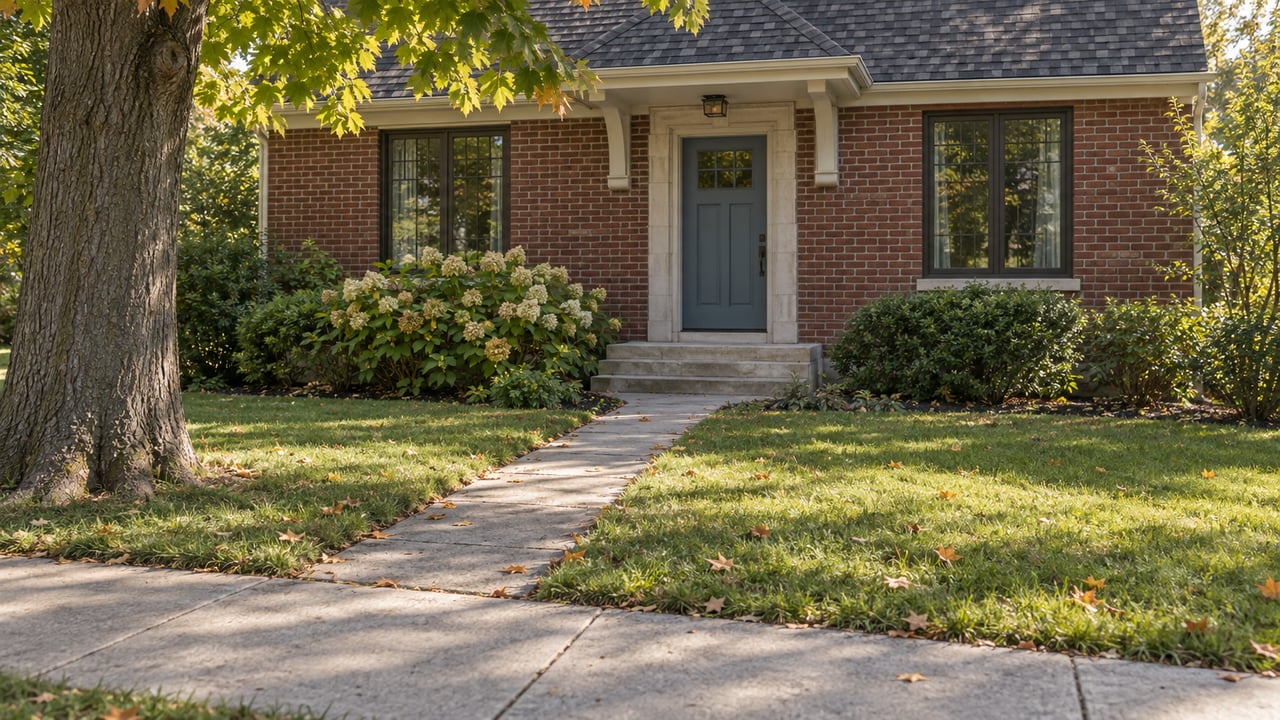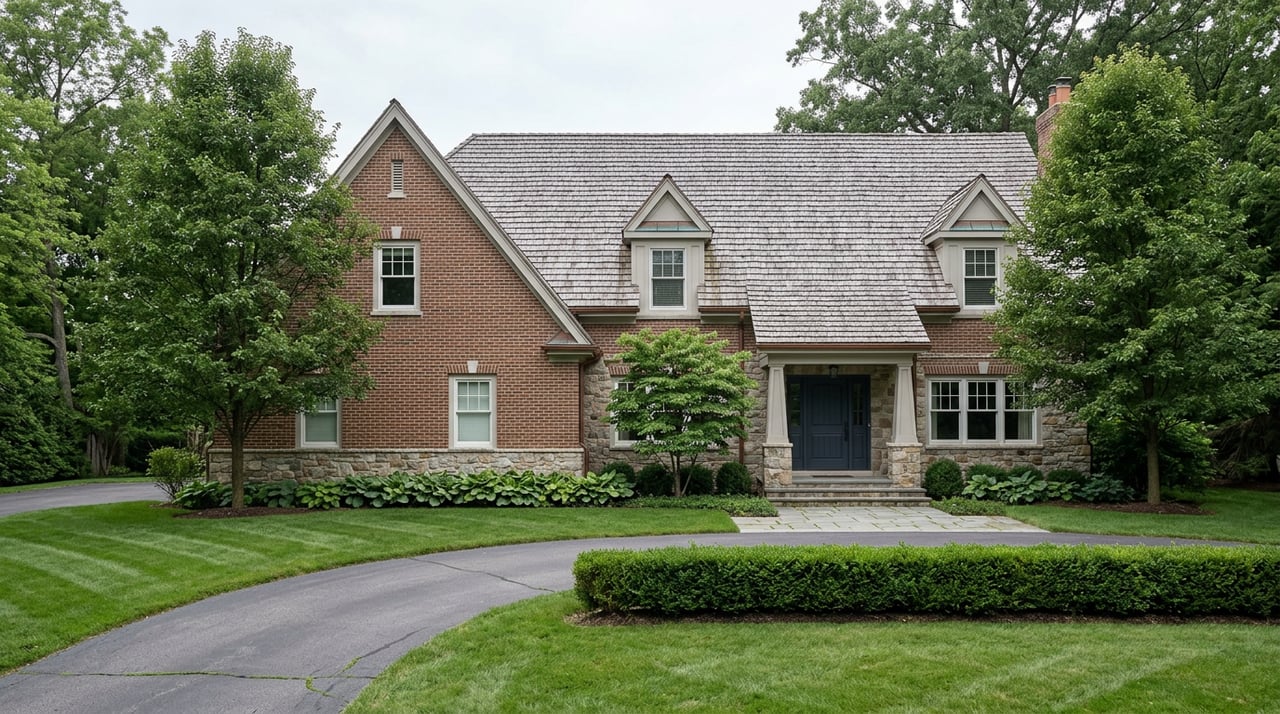
Two buyers tour Inverness on the same Saturday. Both find a house they like. Both are roughly the same size, sitting on comparable acreage, priced within a few thousand dollars of each other. One buyer's monthly utility line item turns out to be manageable. The other's is fifty percent higher, permanently, for the same category of service. Neither home is better built. Neither owner uses more water. The difference has nothing to do with the house at all. It comes down to which side of a boundary the lot happens to sit on, a boundary that has nothing to do with Inverness's own village limits.
That's because Inverness has never built its own water and sewer system. For a village known for one-acre-plus homesites and a deliberately rural feel, that might sound like a footnote. It isn't. It's the reason two nearly identical Inverness properties can carry two very different carrying costs, and it's a detail that rarely comes up until a buyer is deep into comparing listings or, worse, standing at a closing table wondering why the utility transfer paperwork points to a village they've never heard mentioned in the listing.
No system of its own
Most Chicago-area suburbs run their own water utility. Inverness doesn't. Residents rely on one of two arrangements: a private well and septic system on the lot itself, or municipal water and sewer purchased from a neighboring village that built the infrastructure to reach across the Inverness line.
According to Inverness's own water and sewer service page, residents outside the well-and-septic areas are directed to contact the Village of Palatine to start service, unless their home falls within a short list of specific developments served instead by the Village of Barrington:
- Braymore Hills
- Sanctuary II of Inverness
- Glencrest III
- Weatherstone
- Estates at Inverness Ridge
If your address is on that list, Palatine has nothing to do with your water bill. Barrington does. If it isn't, the reverse is true. There's no visual cue on a plat map or a listing photo that tells you which camp a given lot falls into. You find out by asking, or by getting the utility transfer paperwork at closing.
The fifty percent line
Here's where the story stops being a matter of paperwork and starts being a matter of money. Barrington's own water and utility billing page states plainly that customers in Inverness and Barrington Hills who receive service under the intergovernmental agreement pay one and a half times the rate that Barrington charges its own residents. The village's reasoning is straightforward: it built and continues to maintain the additional water main and sewer infrastructure required to reach beyond its own limits, and that cost gets recovered from the customers who benefit from it.
That surcharge isn't a temporary bridge rate that fades once a certain debt is paid down or a certain number of years pass. It's structural. It exists because the parcel sits outside Barrington's boundary, and nothing about buying the home, living in it for a decade, or refinancing changes that fact. A buyer closing on a home in Weatherstone or the Estates at Inverness Ridge today inherits that fifty percent premium the same way they inherit the property tax bill.
The timing matters too. Barrington's board approved a new rate increase and a flat monthly Capital Improvement Charge effective January 1, 2026, tied directly to aging infrastructure: a wastewater treatment plant built in 1936 with no major upgrades since the late 1970s, and an iron filtration system installed in 2000 that has already outlived its expected twenty-year life. Improvements to that filtration system were slated to begin in spring 2026. None of that changes whether a given Inverness lot is on the Barrington side of the line. It does mean the premium those homeowners pay is riding on top of a rate base that is actively being reinvested in, which is worth understanding before assuming this year's bill is next year's bill.
There's a second layer to this that has nothing to do with price and everything to do with what actually comes out of the tap. Palatine draws its water from Lake Michigan, delivered through the Northwest Water Commission and the City of Evanston's treatment facility. Barrington draws from four shallow wells it owns and treats itself, storing the output in its own reservoirs before it reaches a customer's home. Two houses a few streets apart in Inverness aren't just on different bills. They're on entirely different water sources, run by two separate municipal systems that were never designed to talk to each other.
The other half of the map
Not every Inverness home is on a municipal system at all. A meaningful share sit on private well and septic, which comes with a different kind of arithmetic. There's no monthly bill from an outside village, but there's also no shared infrastructure absorbing the cost of a failing drainfield or a well pump that needs replacing. That cost lands entirely on the homeowner, on the homeowner's schedule, not spread across a rate base the way a municipal surcharge is.
Inverness treats this seriously enough to run its own septic program rather than deferring entirely to the county. Cook County's health department confirms that Inverness is one of only four municipalities in the county, alongside Barrington Hills, Palos Park, and South Barrington, that maintains its own IDPH-approved septic ordinance instead of routing every review through the county office. The village's own code spells out real technical requirements: septic tanks must be watertight, baffles have to sit at specified depths and clearances, and access risers have to bring the tank within reach of the surface for inspection and cleaning. A well-and-septic home in Inverness isn't off the grid in a regulatory sense. It's simply regulated by the village directly rather than by an outside utility's rate structure.
Why this belongs in the comparison, not the closing surprise
None of this shows up in a listing description. A five-acre estate on private well and septic, a colonial in a Palatine-served pocket, and a similar home in one of the five Barrington-served developments can all look interchangeable in photos and square footage. They are not interchangeable in what they cost to run month to month, and the gap isn't small enough to round to zero.
The practical move is to ask the question before it becomes a surprise: which system serves this specific address, and if it's Barrington, has the buyer priced in the non-resident rate rather than assuming it matches a typical suburban water bill. For well-and-septic properties, the right question shifts to maintenance history and the age of the system, since that's where the real cost sits.
None of this is a reason to avoid one part of Inverness over another. Plenty of buyers are drawn specifically to the privacy and lot size that come with the well-and-septic side of the village, and plenty are perfectly comfortable with a Barrington-served utility bill in exchange for a particular street or setting. The point is simply that the decision deserves to be made with the full picture, not discovered after the fact.
A few questions worth asking before you write an offer
How do I find out which system actually serves a specific Inverness address? Start with the Village of Inverness directly, since the answer depends on which subdivision the parcel sits in rather than anything visible from the street. Your agent can help confirm this as part of due diligence before an offer goes in, not after.
Does the Barrington non-resident rate ever convert to the in-village rate? Nothing in Barrington's published rate structure suggests the surcharge phases out over time. It's tied to being outside the village's boundary, not to how long you've owned the home.
Is well and septic automatically the cheaper option? Not automatically. There's no recurring utility bill, but the homeowner carries the full cost of testing, pumping, and eventual system replacement directly, on a timeline they don't control. It trades a predictable monthly line item for an unpredictable but self-managed one.
Carrying costs like these rarely show up until someone is comparing two homes side by side or sitting across from a lender. If you're weighing options across Inverness, or trying to understand what a specific address actually costs to own month to month, Heidii Smith has spent decades helping buyers and sellers in this market see past the listing sheet. Let's Connect.