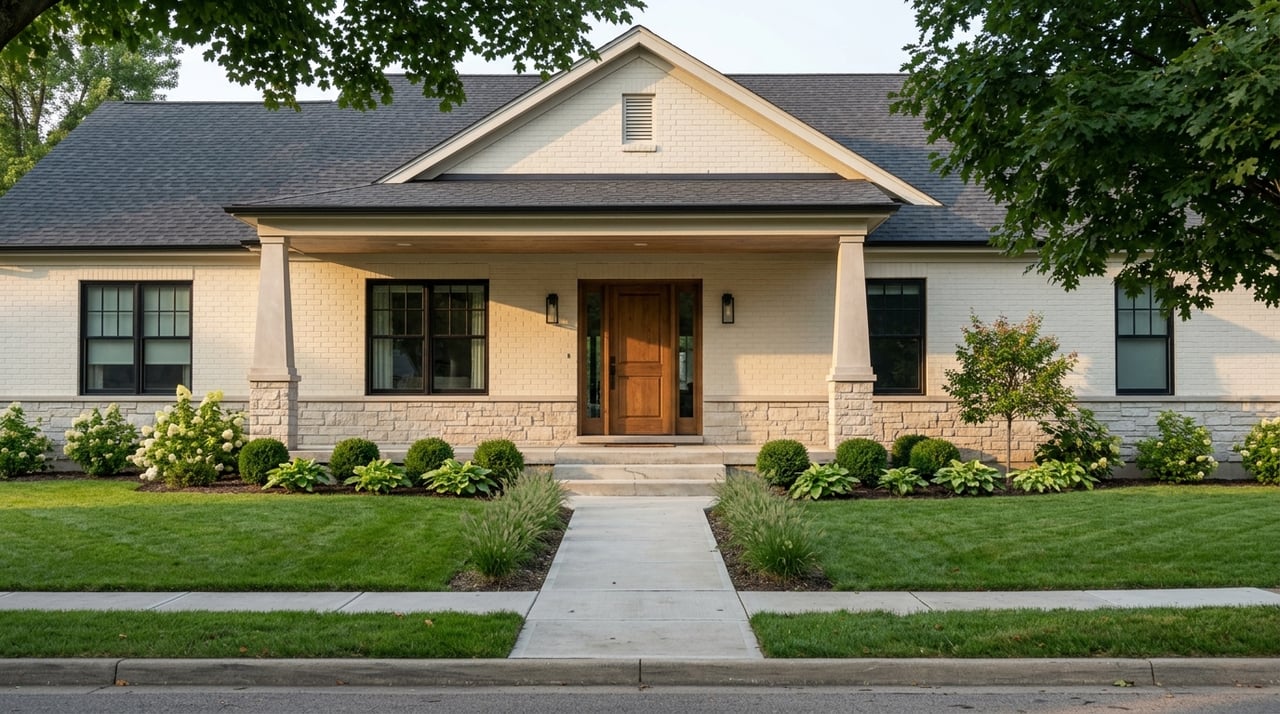
If you are weighing Schaumburg against other Northwest suburbs, you are probably asking a practical question: will this community fit your day-to-day life and your budget? That is the right place to start. Schaumburg offers a wide range of housing, strong access to major roads, and a long list of everyday conveniences, but it will not be the perfect match for everyone. This guide will help you look at the tradeoffs clearly so you can decide whether Schaumburg belongs at the top of your list. Let’s dive in.
What Schaumburg offers buyers
Schaumburg stands out for one big reason: range. The village reports more than 12,000 single-family homes and more than 21,000 multi-family units, which gives you a broader mix than you will find in many suburbs nearby.
That variety matters when you are trying to match a home to your stage of life. In Schaumburg, your choices may include apartments, townhomes, manorhomes, condominiums, quadrominiums, duplexes, rowhouses, and detached single-family homes. Instead of shopping in a one-note market, you can compare several housing styles in the same community.
The mix is also still evolving. Recent village development updates at Loeber Farm include a planned community with 43 single-family homes, 42 townhome units, and 37 rowhome units, along with preserved open space. For buyers, that points to a suburb that continues to add housing choices rather than staying locked into one format.
Schaumburg home prices in context
If price is a major part of your search, Schaumburg may deserve a closer look. March 2026 market snapshots placed the median sale price at $308,585, while the median list price was $324,950.
Those figures place Schaumburg in a useful middle ground for many buyers. Compared with nearby Northwest suburbs, its median sale price was below Elk Grove Village at $365,000, Palatine at $375,000, Hoffman Estates at $407,000, and Arlington Heights at $525,000.
That does not mean every home in Schaumburg is inexpensive. The village says prices can range from condos under $100,000 to single-family homes over $900,000, and listing data shows variation by ZIP code, from a median list price of $302,000 in 60194 to $499,000 in 60173.
The takeaway is simple: Schaumburg can work for more than one budget level. If you want a suburb where you can compare entry-level condos, attached homes, and higher-end detached properties without leaving the same market, Schaumburg gives you room to do that.
Transportation and commuting reality
For many buyers, commute fit can matter just as much as price. Schaumburg sits at the intersection of I-90, I-290, and Illinois 390, and the village places it just under 30 miles northwest of downtown Chicago and about 8 miles northwest of O’Hare International Airport.
That road access is one of Schaumburg’s strongest practical advantages. If you drive for work, travel often, or want easier regional access, this location can be a real plus.
Transit is available, but it helps to understand what that really looks like. Schaumburg is served by Metra, Pace, the Woodfield Trolley, DART, and senior transportation services. The Metra station is on the Milwaukee District West Line, which connects east to Union Station and west to Elgin.
The Northwest Transportation Center is another key part of the picture. Pace says it serves Cook, DuPage, and Kane counties, handles about 1,000 daily boardings, and was renovated in November 2024 with expanded parking and ADA-accessible upgrades.
At the same time, Schaumburg is not a simple walk-to-rail suburb in the way some buyers may want. The village’s community health assessment notes that the only Metra stop in the village is in the far southwest corner, and bus connections are concentrated more at the transportation center than across the whole village.
So what does that mean for you? Schaumburg tends to work best as a car-plus-transit community. If you want layered transportation options and strong highway access, it checks many boxes. If your top priority is living close to rail with a more rail-centered daily routine, you may want to compare specific locations very carefully.
Local convenience is a big strength
Some suburbs feel mostly residential, with errands and entertainment spread out. Schaumburg is different. One of its biggest selling points is how many daily conveniences and activity centers are built into the community.
Woodfield Mall is the clearest example. Simon describes it as Chicago’s go-to shopping and entertainment destination, with more than 10,000 parking spaces, 8 full-service restaurants, more than 30 fast-casual dining options, and Pace bus stops at the mall.
Beyond Woodfield, Schaumburg offers a strong mix of civic, cultural, and recreational amenities. The village highlights concerts and a farmers market in Town Square, performances at the Al Larson Prairie Center for the Arts, the Trickster Cultural Center, Legoland Discovery Center, and independent league baseball at Wintrust Field.
If you like having things to do close to home, that concentration can make everyday life easier and more enjoyable. It also gives the suburb a more active, destination-oriented feel than some nearby communities.
Parks, trails, and outdoor access
Convenience is only part of the picture. Schaumburg also offers substantial outdoor space, which matters if you want balance between suburban access and room to get outside.
The village says 86.8% of residents lived within a 10-minute walk of a park or green space in 2022. That is a practical quality-of-life point, especially if you value nearby open space for walks, biking, or time outdoors.
Schaumburg also reports 90 miles of bike path and 1,000 bike parking and locker spaces. For buyers who like active transportation or recreational cycling, that network adds another layer of flexibility.
Local destinations help round out the experience. Spring Valley Nature Center and Heritage Farm bring a more natural, heritage-focused setting, while the Schaumburg Sculpture Park offers 20 acres of meadow and forest and is free year-round.
The village also notes that Town Square, Village Hall, the Prairie Center, Sculpture Park, Heritage Farm, and Spring Valley connect through a 4.2-mile bike loop. Busse Woods and its 10.8 miles of bike path are also only about 3.5 miles from Town Square.
Who Schaumburg may fit best
Schaumburg may be a strong fit if you want flexibility. Buyers who are comparing condos, townhomes, and single-family homes in one suburb often appreciate how many options exist here.
It can also appeal to buyers who want a suburb with strong day-to-day convenience. Access to highways, shopping, dining, entertainment, parks, and services all contribute to a lifestyle that feels efficient and connected.
If you travel often or need regional access, the location near major expressways and O’Hare may also work in your favor. And if you value having both practical amenities and recreational options nearby, Schaumburg brings a lot together in one place.
When another suburb may be a better fit
Schaumburg is not automatically the right answer for every buyer. If your top priority is a quieter, more purely residential environment, you may prefer to compare nearby suburbs block by block.
The same goes if you want a straightforward walk-to-rail lifestyle. Schaumburg offers transit options, but the village’s own reporting makes clear that rail access is limited and not spread evenly across the community.
That is why your decision should come down to your daily routine, not just a headline price or a popular name. The right suburb is the one that fits how you actually live.
How to evaluate Schaumburg wisely
If Schaumburg is on your list, it helps to compare it through a few simple lenses:
- Housing type: Do you want a condo, townhome, or detached house?
- Budget range: Which price band feels comfortable for you?
- Commute style: Are you mostly driving, using transit occasionally, or relying on rail?
- Lifestyle needs: Do you want shopping, dining, events, and recreation close by?
- Setting preference: Do you want a more active, convenience-focused suburb or a more purely residential feel?
Looking at these questions can help you move past general impressions. It also helps you compare Schaumburg fairly against nearby options instead of assuming one suburb is universally better.
Schaumburg’s biggest advantage is that it offers many buyers a practical middle path: broader housing choice, mid-market pricing relative to several nearby suburbs, strong road access, layered transit options, and a deep bench of local amenities. For the right buyer, that combination is hard to ignore.
If you want help comparing Schaumburg with nearby Northwest suburbs based on your budget, commute, and lifestyle goals, Heidii Smith can help you narrow the options and make a confident move.
FAQs
Is Schaumburg, Illinois, affordable compared with nearby Northwest suburbs?
- Schaumburg’s March 2026 median sale price of $308,585 was below nearby Elk Grove Village, Palatine, Hoffman Estates, and Arlington Heights, making it a useful option for buyers comparing value in the Northwest suburbs.
What types of homes can you buy in Schaumburg, Illinois?
- Schaumburg offers a broad housing mix that includes condominiums, townhomes, manorhomes, rowhouses, duplexes, apartments, and single-family homes.
Is Schaumburg, Illinois, good for commuting?
- Schaumburg offers strong highway access through I-90, I-290, and Illinois 390, along with Metra, Pace, DART, and the Woodfield Trolley, but it functions best as a car-plus-transit suburb rather than a fully rail-centered one.
What amenities are available in Schaumburg, Illinois?
- Schaumburg offers major shopping and dining at Woodfield Mall, cultural venues like the Al Larson Prairie Center for the Arts, community events in Town Square, recreational amenities, and a wide range of parks and trails.
Is Schaumburg, Illinois, a good fit for buyers who want outdoor access?
- Schaumburg offers strong outdoor access with 90 miles of bike path, many nearby parks and green spaces, Spring Valley Nature Center, Sculpture Park, and easy access to Busse Woods.