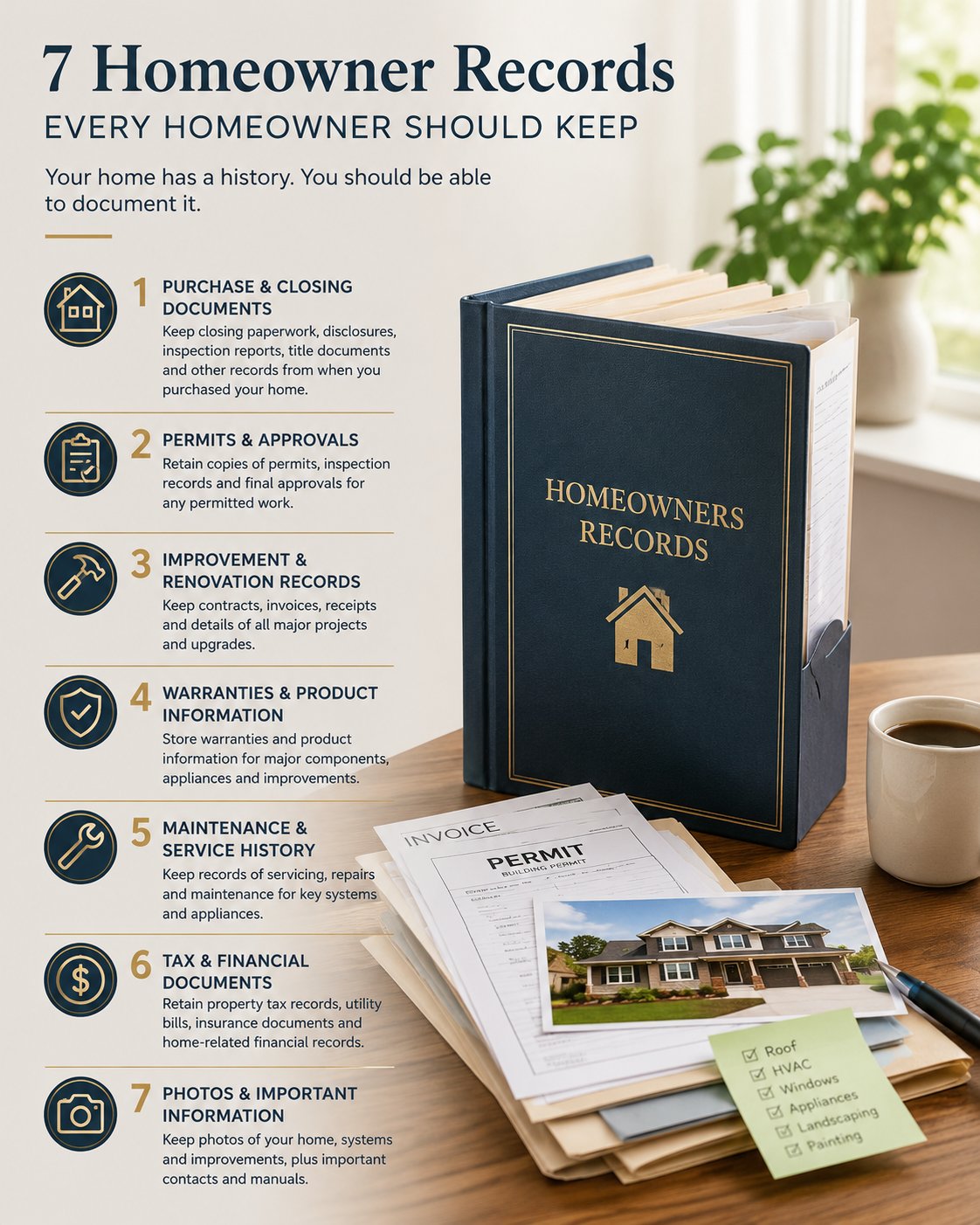
Your home has a history. You should be able to document it.
Over the years, roofs are replaced, HVAC systems are upgraded, bathrooms are remodeled, windows are changed, plumbing is repaired, and countless other improvements are made.
Then, when it’s time to sell, the question comes up:
“When was that done?”
Instead of relying on memory, create a Home File—paper, digital, or both—and keep these 7 categories organized:
 Purchase & Closing Documents
Cl Posing paperwork, disclosures, inspection reports, title documents, and other important records from your purchase.
 Permits & Approvals
KeKeep permits, inspection records, and final approvals for work completed on your property.
 Improvement & Renovation Records
S Contracts, invoices, receipts, and details for major projects such as kitchens, bathrooms, roofs, windows, electrical, plumbing, and more.
 Warranties & Product Information
KeKeep warranties and information for your roof, HVAC, water heater, windows, appliances, and other major components.
 Maintenance & Service History
D All current document significant HVAC service, roof repairs, pest treatments, plumbing work, appliance repairs, and other maintenance.
 Contractor & Vendor Information
KeKeep the company name, contact information, date of service, scope of work, and invoice. You may need that contractor again years later.
 Photos & Documentation
 TaLike before, during, and after photos of major projects—especially improvements that will eventually be hidden behind walls, flooring, ceilings, or landscaping.
 WHY DOES THIS MATTER WHEN YOU SELL?
Good records don't automatically increase your home's value, but they can replace uncertainty with useful information.
There’s a big difference between:
 “I think the roof was replaced around 2018.” and
 “The roof was replaced in 2018. Here’s the invoice, contractor information, permit, and warranty.”
 Buyers appreciate clarity, organization, and information.
And when it comes time to sell, you don't want to spend days trying to reconstruct 10, 15, or 20 years of your home's history.
Start your Home File now. Every time something significant is repaired, replaced, or improved, add the documentation.
Ten minutes today could save you hours of searching later.
 Smart homeownership isn't just maintaining your home—it's maintaining its history.
 This is general real estate information and not legal, tax, contracting, or records-retention advice.