Two homes in Inverness, Illinois can carry almost identical price tags and still close under completely different rules. One buyer signs a standard mortgage application. The other has to prove, in writing, that a private septic system has never failed, because a failed system can stop an FHA, VA, or USDA loan before it starts. Same zip code. Same school boundaries. Two different transactions.
Most guides to Inverness lead with the acreage, the golf course, or the wooded lots that made the village a name in the northwest suburbs. Those things are real. What they skip is the line that actually decides how a purchase gets financed, inspected, and disclosed: whether a given address sits on a private well and septic system or on municipal water and sewer.
The village drew this line before most buyers ever ask about it
Inverness's own utility page states it plainly. Most homes in the village run on private wells and septic systems. Five named communities are the exception: Inverness on the Ponds, the Shires of Inverness, Maison du Comte, Ashbury, and the Enclave. Residents in those five are served by the Village of Palatine, and anyone moving into one starts water and sewer service through Palatine directly rather than maintaining a well and tank on their own property.
That split is not a footnote. It determines whether a buyer is budgeting for a monthly utility bill or for the lifetime cost of a private system. It determines whether an HOA governs exterior maintenance or whether the homeowner alone answers to the village's zoning code. And it determines what shows up on the seller's disclosure form.
What the two products actually look like
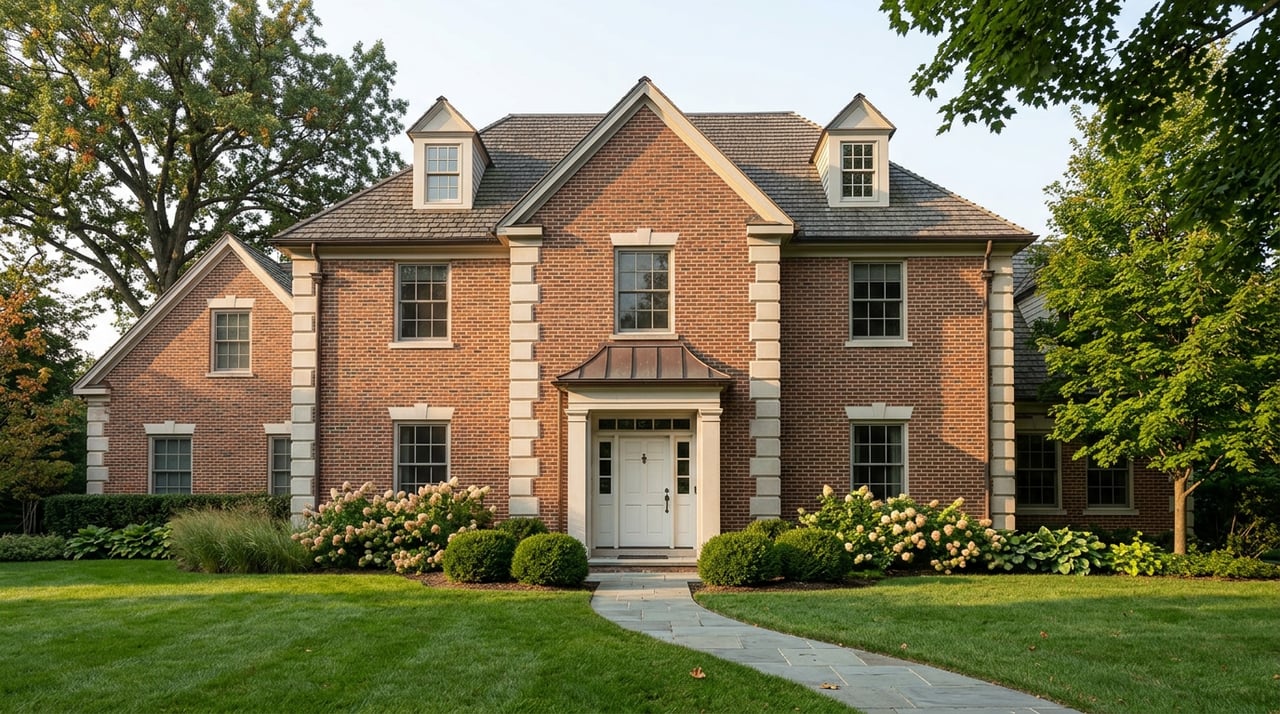
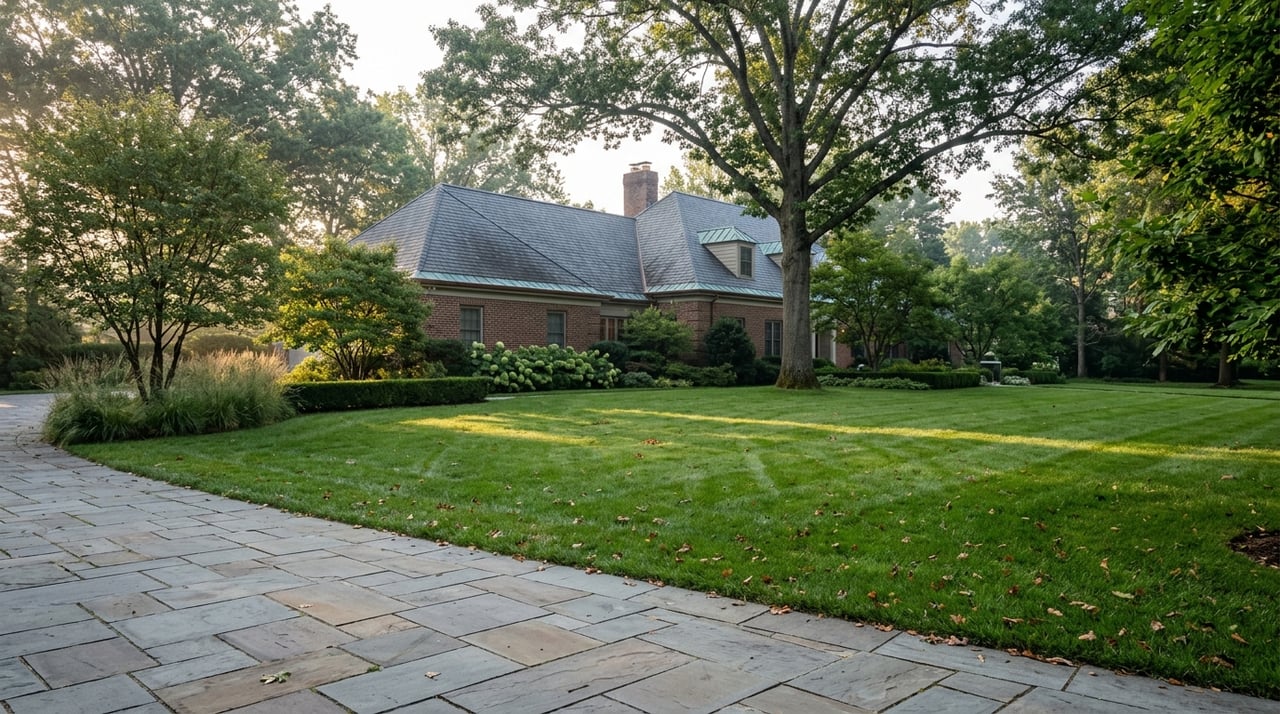
The estate-lot side of Inverness traces back to the original 1920s plat, when a minimum lot size of one acre was set to preserve the rolling terrain that gave the area its name. Subdivisions like McIntosh, Cheviot Hills, Braymore Hills, Bonny Glen, Muirfield, and the gated communities of Estates at Inverness Ridge and The Reserve carry that legacy: acre-plus lots, custom construction, and, in most cases, no HOA dues at all. Recent resales in Bonny Glen and Muirfield closed at $1,330,000 and $1,450,000, and those homes run on private well and septic.
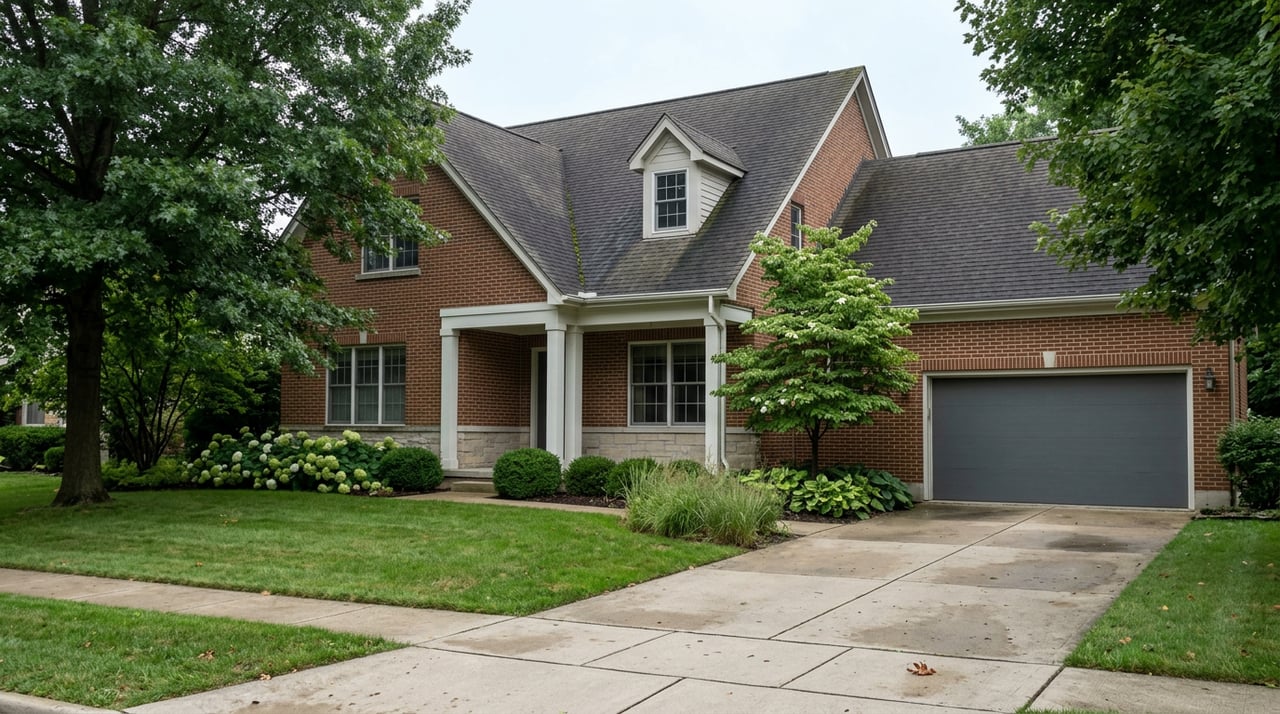
The other side of the line looks nothing like it. The Shires of Inverness, built between 1983 and 1990, packs 149 townhomes and 17 condos onto 38 acres with a clubhouse, two tennis courts, and two private lakes. HOA dues there run from $469 to $629 a month, and the average annual property tax across the community is roughly $7,374. Maison du Comte, a newer townhome community built starting in the late 2010s near Roselle and Algonquin roads, follows a similar model, with its most recent active listing priced at $624,900. A recent Shires sale closed at $645,000, a full price tier below the estate-lot subdivisions, but with a monthly HOA line item the acre-lot owners never see.
As of August 23, 2026, roughly 30 homes were actively listed across Inverness, with a median list price near $964,500, average days on market around 53, and an average price per square foot of about $257. That single median sits on top of both markets described above. A buyer using it to gauge affordability is averaging a $630,000 townhome against a $1.4 million estate and calling the result a benchmark.
| Estate-lot subdivisions (McIntosh, Cheviot Hills, Bonny Glen, Muirfield, Estates at Inverness Ridge, The Reserve) | HOA communities on Palatine utilities (Shires of Inverness, Maison du Comte, the Ponds, Ashbury, the Enclave) | |
|---|---|---|
| Typical lot | One acre or more | Townhome or condo lot |
| Water and sewer | Private well and septic | Village of Palatine |
| HOA dues | Generally none | Roughly $469 to $629 a month (Shires) |
| Recent resale examples | $1.33M (Bonny Glen), $1.45M (Muirfield) | $624,900 listing (Maison du Comte), $645,000 sale (Shires) |
| Curbs and fences | Not permitted under village character | Governed by HOA covenants |
Why there are no curbs to mark the difference
Arthur T. McIntosh bought the Temple farm in 1926 and eventually assembled 1,500 contiguous acres to build a community he wanted to feel like the countryside rather than a subdivision. Way Thompson, who laid out the early roads, designed them to follow the natural contours of the land instead of a grid, and the one-acre minimum lot size dates from that same period. The village incorporated in 1962, and the character McIntosh set in motion is still visible on the estate-lot side of town: no curbs, no fences, and lots large enough that the boundary between one property and the next is more suggestion than survey line.
None of that applies inside the Shires of Inverness or Maison du Comte, where HOA architectural rules, not village-wide aesthetic tradition, govern what a homeowner can build or fence. A buyer who assumes the whole village operates under the same unwritten rules about curb cuts and property lines is applying estate-lot norms to a planned community, and the reverse mistake is just as common.
The disclosure question a well and septic actually raises
Illinois law requires sellers to disclose known material defects in a well or septic system on the state's Residential Real Property Disclosure Report, the same form that covers radon, flooding, and structural issues. The obligation only covers what a seller actually knows. Illinois does not require an inspection before that form gets signed.
Inverness adds a wrinkle most buyers never expect. Cook County's health department normally reviews and approves private sewage systems throughout the county, but Inverness is one of only four municipalities, along with Barrington Hills, Palos Park, and South Barrington, that runs its own IDPH-approved septic ordinance instead of deferring to the county. A septic permit or inspection record in Inverness comes from the village, not from Cook County directly, which matters if a buyer's attorney or lender goes looking for the paper trail.
The financing consequence is the part that actually changes a transaction. A pre-sale septic inspection and pumping record typically cost $300 to $600 combined, cheap insurance against a much bigger number: a full replacement system can approach $10,000. FHA, VA, and USDA loans will not close on a property with a documented failed septic system, which means a buyer using one of those loan types on an estate-lot property needs a clean inspection in hand well before closing, not as a formality but as a financing requirement.
Buyers on the Palatine-served side of the village skip all of this. Their due diligence looks like any municipal-utility purchase: confirm the HOA's financial health, dues, and any pending special assessments, since Illinois disclosure law also requires sellers to share that information for properties governed by an association.
What this means before you write an offer
A few questions separate an informed Inverness buyer from one who is about to be surprised at the inspection table.
- Is this address served by private well and septic, or is it one of the five Palatine-serviced communities?
- If it is on well and septic, when was the system last inspected, and does the seller have the village permit on file rather than a Cook County record?
- If it is in an HOA community, what are current dues, and is there a pending special assessment?
- If financing through FHA, VA, or USDA, has a septic inspection been scheduled early enough to resolve issues before the closing date?
- Does the lot fall under the original one-acre zoning, and if so, does the absence of curbs and fences reflect village character or a specific covenant that would restrict future changes?
None of these questions show up in a portal search filtered by price and bedroom count. They show up in a disclosure packet, a village permit file, or a conversation with someone who has closed transactions on both sides of Inverness's utility line.
FAQ
How can I tell if a specific Inverness address is on well and septic or municipal service before I tour it? Start with the address against the five named communities served by the Village of Palatine: Inverness on the Ponds, the Shires of Inverness, Maison du Comte, Ashbury, and the Enclave. Anything outside those developments is most likely on a private system, though confirming with the village or the seller's disclosure is the reliable step.
Does no HOA mean lower carrying costs on the estate-lot side? Not necessarily. There is no monthly due, but well and septic maintenance, periodic pumping, and eventual system replacement are lump-sum costs the homeowner carries alone rather than a fee spread across a community.
Why does Inverness handle septic permits differently than the rest of Cook County? The village is one of four Cook County municipalities with its own IDPH-approved septic ordinance rather than deferring inspections to the county health department, so permit and inspection records for Inverness properties are held by the village itself.
Do the no-curbs, no-fences rules affect resale value? They reflect the estate character the original developer built into the zoning nearly a century ago, and buyers drawn to that look for it specifically. It is a market preference rather than a value judgment, and it does not apply inside the HOA-governed communities.
Comparing an Inverness listing to anywhere else in the northwest suburbs starts with knowing which of these two markets you are actually looking at. Heidii M Smith Bond has spent decades walking buyers and sellers through exactly this kind of local detail, the kind that never shows up in a listing sheet but decides how smoothly a closing actually goes. Let's Connect.