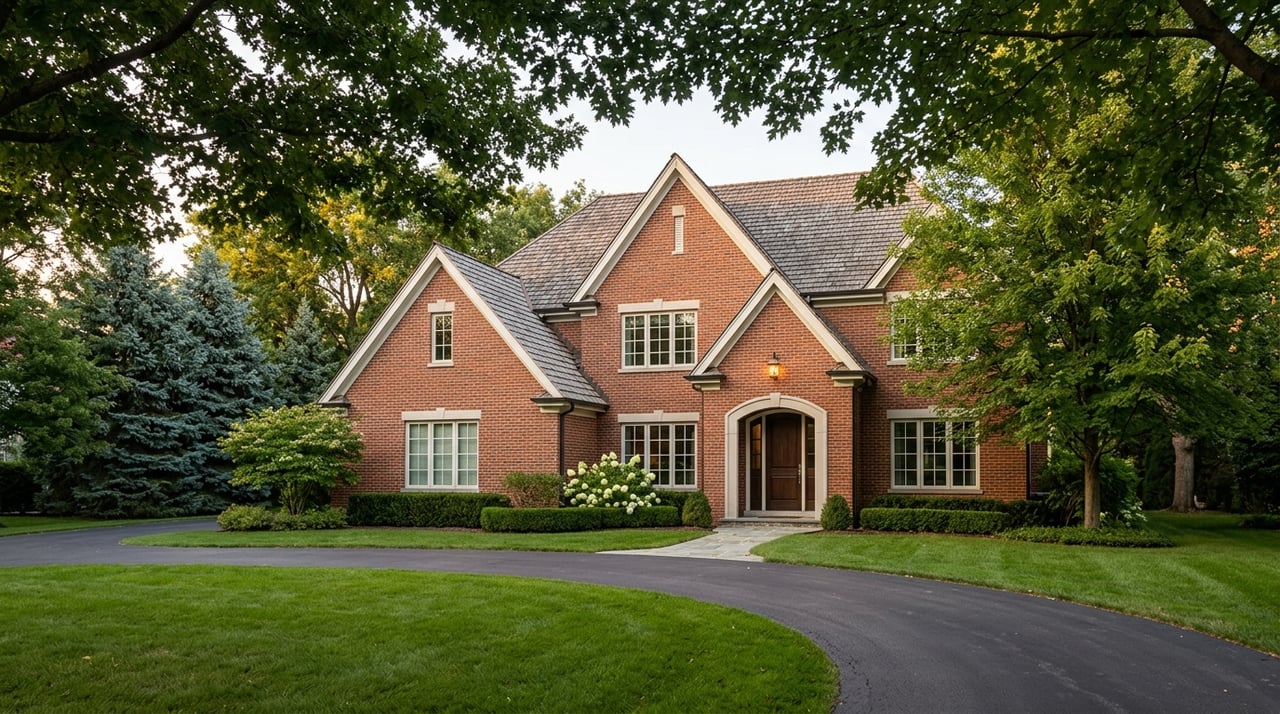
If you are searching for a place that feels quieter, more open, and less crowded than many suburban settings, Inverness stands out right away. Many buyers are drawn to communities that offer room to breathe without giving up access to daily conveniences, and Inverness fits that goal in a very specific way. When you understand how the village was planned, how homes are spread out, and how services work by address, it becomes much easier to decide whether it matches your lifestyle. Let’s take a closer look.
Why Inverness Feels Different
Inverness is a small village in northwest Cook County that covers about 6.5 square miles and sits roughly 30 miles from Chicago’s Loop. The 2020 Census counted 7,616 residents, with a 2024 estimate of 7,428. That relatively small population, spread across the village, helps create a setting that feels more open than compact.
A big reason for that atmosphere goes back to the village’s early planning. According to the village history, roads were designed to follow the land’s natural contours, wooded meadows were preserved, and a minimum lot size of one acre was established. That planning approach still shapes how Inverness feels today.
Space And Privacy Are Part Of The Layout
Inverness is not a place where privacy depends only on a backyard fence or a single home design. The village’s original one-acre lot pattern and low-density layout build space into the community itself. In practical terms, that often means more separation between homes and a quieter overall setting.
The housing profile supports that impression. Census QuickFacts reports an owner-occupied housing rate of 98.2%, and the median value of owner-occupied homes is $715,600. Combined with the low population density of 1,165.6 people per square mile, those figures help explain why Inverness is often seen as an estate-style residential village.
A Mostly Residential Setting
One of the clearest things to know about living in Inverness is that it is primarily residential. The village history identifies Williamsburg Village as the only business development within Inverness. That limited commercial footprint helps preserve the calm, residential feel many buyers are looking for.
If you want a home base that feels tucked away, this can be a real advantage. If you prefer a walk-to-everything environment with a busy downtown in the center of town, Inverness may feel different from what you expect. Its appeal is more about quiet surroundings and nearby access than an active in-town retail scene.
What Daily Life Can Look Like
For many residents, Inverness offers a balance between privacy at home and convenience nearby. The village borders Barrington, Palatine, Hoffman Estates, and Barrington Hills, and road references from the village point to key access corridors such as Palatine Road, Ela Road, Dundee Road/IL-68, and Barrington Road. That road network helps connect you to shopping, dining, and day-to-day errands in neighboring communities.
This means you are likely to drive for many everyday activities rather than rely on a central village business district. For some buyers, that is a perfect tradeoff. You get the quieter residential atmosphere at home while still staying close to the broader amenities of the northwest suburbs.
Nearby Amenities Without The Noise
Inverness itself is intentionally limited in commercial development, but nearby communities provide more options. Barrington offers a village center with shopping and dining, and Palatine notes a flourishing downtown business district along with multiple shopping areas throughout the community. That broader local pattern makes Inverness a strong fit for buyers who want calm at home and choices nearby.
Recreation is also part of the picture. The village says residents are served by both the Inverness Park District and the Palatine Park District. The Inverness Park District maintains three parks totaling 42 acres: North Park, Maggie Rogers Park, and South Park.
Mature Landscape And Natural Character
One of Inverness’s strongest lifestyle features is its natural setting. The village history highlights preserved rolling land and wooded meadows, and the community places visible importance on trees and landscape character. The village also notes its Arbor Day observance and tree-planting culture.
That emphasis carries into village oversight. The building department handles zoning, permits, inspections, and code enforcement, and the building code includes private sewage disposal systems and tree preservation on private property. For homeowners, this suggests a community that pays attention to how exterior changes affect the broader character of the village.
Homes Often Come With Different Utility Setups
If you are considering a move to Inverness, one of the most important practical points is utilities. Most homes are on private wells and septic systems, while some subdivisions receive water and sewer service from the Village of Palatine or the Village of Barrington instead. This is one of the clearest signs that Inverness is different from a more typical utility-dense subdivision.
For buyers, this means you should confirm the setup for any specific property early in the process. Utility details can affect maintenance expectations, inspections, and how you evaluate the home overall. It is a normal part of buying in Inverness, but it is worth understanding upfront.
Address Details Matter In Inverness
Inverness is a village where important details can vary by address. The village notes that the eastern half is in Palatine Township and the western portion is in Barrington Township. School assignment can also vary, with parts of the village served by District 15, 211, or 220 depending on location.
Fire protection may differ as well, with addresses falling under either the Inverness Fire Protection District or the Barrington Countryside Fire Protection District. Because of that, buyers should avoid making assumptions based on a neighborhood name alone. The village property look-up is designed to confirm zoning district, subdivision, school district, fire district, and other address-specific information.
Commuting And Regional Access
Inverness offers a suburban location with reasonable access to both local job centers and Chicago. Census QuickFacts reports a mean travel time to work of 26.1 minutes for Inverness workers. That supports the idea of a community where driving is common for daily travel.
For rail commuters, nearby Metra options on the Union Pacific Northwest line include the Palatine station and the Barrington station. Barrington’s station also offers commuter parking. If your schedule and destination line up with Metra, those nearby stations can add flexibility for trips into Chicago.
Who Inverness Often Appeals To
Inverness tends to appeal to buyers who value a quieter residential environment and want more breathing room around the home. If you are drawn to mature trees, lower-density surroundings, and a more tucked-away atmosphere, the village offers a distinct alternative to busier suburban patterns. It can also be a strong fit if you appreciate custom homes and a setting shaped by natural land features.
At the same time, it helps to be realistic about what the village is and is not. Inverness is not trying to be a dense mixed-use destination. Its strength is that it functions as a calm residential retreat with nearby suburban conveniences, not as a walkable retail hub.
What Buyers Should Verify Before Making An Offer
Because Inverness has several address-specific variables, careful due diligence matters. A home that looks similar to another on the surface may fall into a different district or have a different utility arrangement. Confirming these points early can help you avoid surprises later.
Here are a few of the most important items to verify:
- Zoning district
- Subdivision details
- School district assignment
- Fire protection district
- Water and sewer or well and septic setup
- Any permit or exterior improvement considerations tied to the property
Why Local Guidance Matters Here
In a village like Inverness, the details behind the address matter almost as much as the home itself. Understanding land use, utility patterns, neighborhood character, and location-specific service districts can shape how confident you feel about a purchase. That is especially true when you are comparing Inverness with nearby communities like Barrington, Palatine, or Hoffman Estates.
With the right guidance, you can look beyond listing photos and understand how a home actually lives day to day. That kind of clarity is often what helps buyers move forward with confidence in a market where privacy, land, and setting are a major part of the value.
If you are considering a move to Inverness or preparing to sell a home in the area, working with an experienced local advisor can make the process more informed and more seamless. For thoughtful guidance, market insight, and polished representation tailored to your goals, connect with Heidii Smith.
FAQs
What is it like living in Inverness, Illinois?
- Living in Inverness is often described as quieter and more private than many suburban communities because of its low-density layout, one-acre lot origins, and mostly residential character.
How private do homes feel in Inverness?
- Homes in Inverness often feel quite private by suburban standards due to the village’s original lot pattern, lower population density, and estate-style development approach.
Are all Inverness homes on public water and sewer?
- No. Most homes are on private wells and septic systems, while some subdivisions receive water and sewer service from the Village of Palatine or the Village of Barrington.
Which school district serves an Inverness home?
- School district assignment depends on the property address, and parts of Inverness may be served by District 15, 211, or 220.
Is Inverness a walkable town center community?
- Inverness is best understood as a quiet residential village rather than a walk-everywhere town center, with broader shopping and dining options found in nearby Barrington and Palatine.
How do you commute from Inverness to Chicago or nearby suburbs?
- Most daily travel is typically by car, and nearby Metra stations on the Union Pacific Northwest line in Palatine and Barrington can support trips into Chicago when the route fits your schedule.